Serving Rutland, VT and surrounding areas. (802) 855-9280
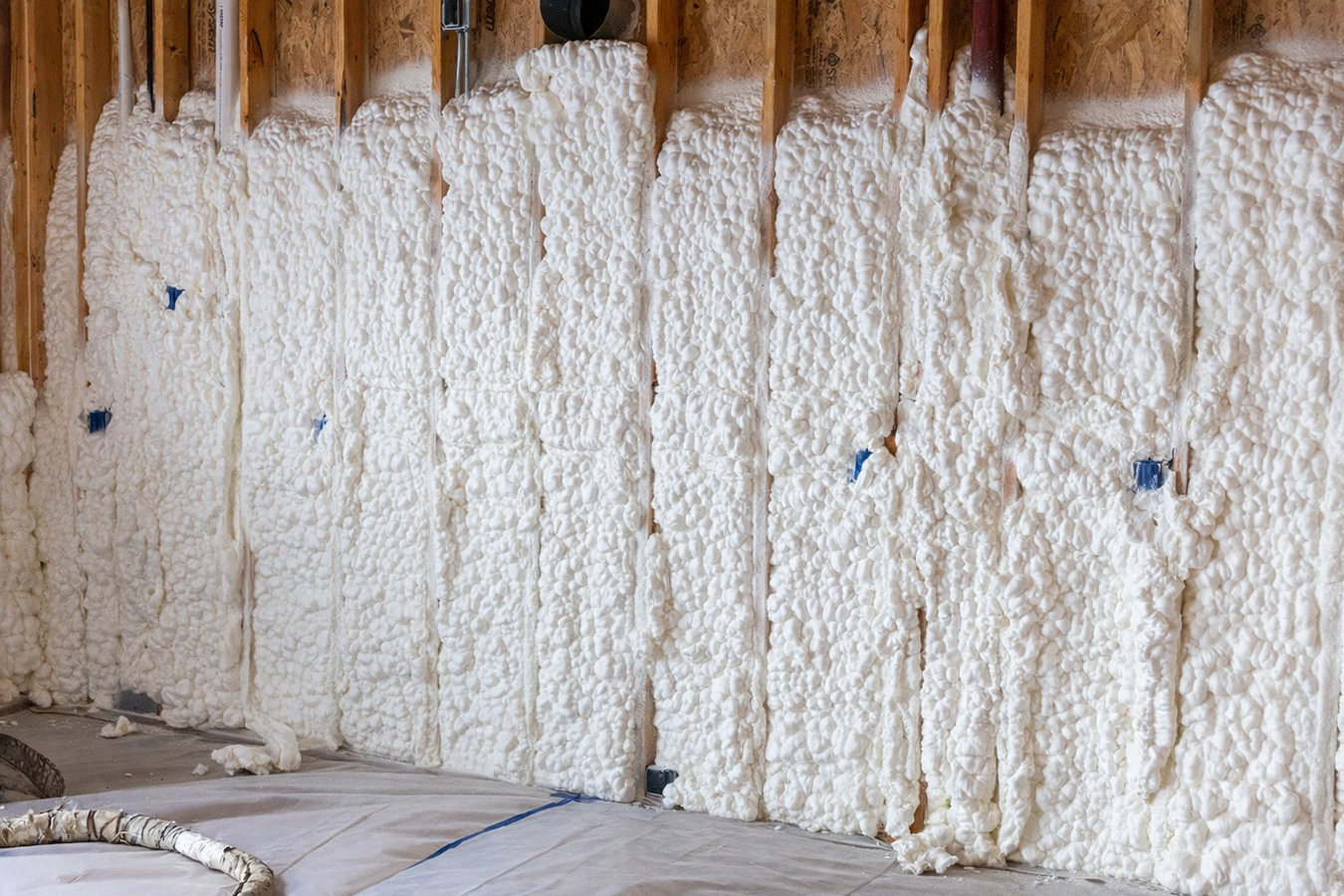
Closed-cell spray foam insulates and air-seals in a single application - the most effective approach for Rutland homes dealing with drafts, cold floors, and high heating bills.
Closed-cell foam insulation in Rutland is a two-part spray-applied material that expands, hardens, and cures in minutes, most residential jobs - a basement rim joist, a crawl space, or an attic section - are finished in a single day, and homeowners typically feel the difference on the first cold night after installation.
What separates closed-cell foam from fiberglass batts or blown-in insulation is that it does two jobs at once: it slows heat transfer and it stops air from moving through gaps. Most insulation only does the first. In Rutland's older housing stock - homes built before the 1970s with balloon-frame walls and uninsulated rim joists - the air leakage problem is often bigger than the insulation problem. Spray foam addresses both in a single pass. Paired with a broader spray foam insulation scope, it can transform how an older home performs in winter.
The foam also acts as a moisture barrier, which matters in Rutland where freeze-thaw cycles push water through foundation walls and crawl space floors every season. Once installed, it doesn't sag, settle, or absorb moisture - it stays effective for the life of the building.
If your fuel oil or propane bill has crept up year over year and your heating system hasn't changed, heat is escaping through gaps somewhere. In Rutland's older housing stock, the most common culprits are uninsulated rim joists and gaps around pipes and wires that run through exterior walls - exactly the spots where closed-cell foam makes the biggest difference.
Cold air pooling near baseboards or radiating from exterior walls on a January night is a sign your home's air barrier has gaps. Rutland winters are cold enough that even small gaps let in enough cold air to make a room feel uncomfortable. If you hold your hand near the bottom of an exterior wall on a cold day and feel moving air, that's a gap foam can seal.
A musty smell in late winter or early spring often means moisture is moving through your foundation walls as snowmelt soaks into the ground around your home. In Rutland, where freeze-thaw cycles are frequent and many homes sit on older stone foundations, this is a very common pattern. Closed-cell foam on the interior of those walls can slow that moisture movement and reduce the conditions that cause mold to grow.
If you've had a pipe freeze in a past Rutland winter, your crawl space or basement rim joist area is not adequately insulated or sealed. Pipes freeze when cold air can reach them - and in a home with gaps in the foundation area, that's exactly what happens during a cold snap. Sealing and insulating those areas with closed-cell foam is one of the most reliable ways to prevent it from happening again.
We apply closed-cell foam in the areas where it delivers the most measurable return for Rutland homeowners. The rim joist - the framing strip that sits on top of your foundation wall - is the single most impactful area in most older homes. It's full of small gaps, it's in direct contact with outdoor temperatures, and it's almost never insulated in homes built before modern energy codes. Sealing it with closed-cell foam cuts drafts at the source and can noticeably reduce what your furnace has to do on the coldest nights of the year. We also apply foam to crawl space walls and floors, basement foundation walls, and under-floor assemblies above unheated garages - any space where cold air has a path into your living area. For homeowners looking to maximize performance, combining closed-cell foam on foundation assemblies with open-cell foam insulation in interior wall cavities delivers a comprehensive air and thermal barrier across the entire home envelope.
Every job starts with an in-person assessment - we don't quote over the phone because the condition of your space matters too much to price without seeing it. We check for moisture before any foam goes in, because foam applied over an active moisture problem traps water and causes bigger headaches than it solves. Efficiency Vermont rebates may apply to your project, and we handle the documentation so your rebate comes through without you having to track it down afterward.
The highest-impact application for most Rutland homes - seals the most overlooked air leak in older foundations and protects pipes from freezing.
Ideal for homes with unheated crawl spaces - stops cold and moisture from rising into first-floor rooms above.
Best for homeowners finishing a basement or dealing with persistent cold floors - seals the wall and insulates in a single application.
Suitable for any room above an unheated garage - stops cold air from migrating up through the floor assembly into living spaces.
Rutland sits in a cold mountain valley and regularly sees temperatures drop below zero in January and February. Heating degree days in the Rutland area are among the highest in the continental United States, which means your heating system works harder here than almost anywhere else in the country. Closed-cell foam's ability to stop both heat loss and air infiltration makes it particularly well-suited to this climate - the energy savings tend to be more dramatic here than in milder regions. Most of Rutland's housing stock dates from the late 1800s through the mid-20th century, when insulation was minimal or nonexistent, meaning there's often significant low-hanging fruit in rim joists, crawl spaces, and basement walls that have never been addressed. Homeowners in Killington and Rutland Town deal with the same combination of cold climate and older construction.
Rutland's climate also produces repeated freeze-thaw cycles through late fall, winter, and early spring. Water that seeps into foundation cracks, freezes, and expands can slowly damage masonry over years. Closed-cell foam applied to the interior of foundation walls creates a barrier that slows moisture movement into the living space - a meaningful benefit in a city where wet basements are a common complaint among homeowners in older neighborhoods. Efficiency Vermont's rebate programs can meaningfully reduce the upfront cost, and Vermont's residential building energy standards set a clear framework for what qualifies.
We'll respond within one business day. We'll ask a few questions about the area you want insulated and any specific problems you've noticed - drafts, cold floors, or moisture - so we come to the assessment prepared.
We visit your home, measure the space, check for existing insulation and moisture, and note any access challenges. You receive a written estimate that explains the scope and the price - no phone quotes, no guessing.
Clear the work area and plan to stay away from home for at least 24 hours after the foam is sprayed. Your contractor will give you a confirmed re-entry time in writing before the job begins.
The crew arrives with their equipment, sprays the foam, and trims it flat once cured - most jobs are done in a few hours. We can send photos of the finished work if you won't be there to see it in person.
Free estimate, no obligation. We respond within one business day.
(802) 855-9280Balloon-frame walls, stone foundations, and uninsulated crawl spaces from the early 1900s are what we work on regularly. We know the specific challenges these structures present and the approaches that work - not just in a general sense, but in the actual homes that make up Rutland's neighborhoods.
Spray foam applied over a moisture problem traps water and creates mold conditions behind the wall. We inspect every space for moisture signs before we spray anything, and we tell you honestly if there's a problem that needs to be addressed first - even if that means we're not the right call yet.
Homeowners sometimes get vague guidance about when it's safe to return after spray foam is applied. We give you a specific re-entry time in writing before the crew starts - not a rough estimate. That includes guidance for pets and any plants in the treated area.
Efficiency Vermont's rebates require specific documentation to process. We handle that paperwork on qualifying jobs so you don't miss out on money you're entitled to. The Spray Polyurethane Foam Alliance sets the industry standards we follow for application safety and quality.
Every closed-cell foam job ends with a walk-through or photo review so you can confirm the work was done correctly and completely. We stand behind what we install.
A softer, more affordable spray foam option well-suited for interior walls and sound dampening in Rutland homes.
Learn MoreBroad spray foam services covering attics, walls, and crawl spaces for whole-home performance in Vermont's cold climate.
Learn MoreRutland winters don't wait - schedule now and have your home sealed before the first hard freeze arrives.