Serving Rutland, VT and surrounding areas. (802) 855-9280
Your home loses heat through the attic, walls, and basement every day. We insulate all three so you stay warm through Vermont winters without watching your heating bills climb.
Home insulation in Rutland covers the attic, walls, and basement of your house, with most single-area projects completed in one day and whole-home work typically taking two to three days.
Heat moves toward colder spaces, and in a Rutland home it finds the weakest path out - usually the attic first, then walls, then the rim joist along the basement ceiling. Most homes in this city were built before modern insulation standards existed, which means they are losing heat every hour of a Vermont winter without the owners realizing how much. A whole-home approach addresses each of those paths so the improvements work together instead of in isolation.
If you are starting from scratch or trying to understand what your home actually needs, combining a home insulation assessment with retrofit insulation work is often the most efficient path for older Vermont homes that were never properly insulated to begin with.
If you are keeping the thermostat at the same setting but your fuel bills keep going up, heat loss through the attic, walls, or basement is a likely cause. In Rutland's long heating season - October through April - even a small amount of heat escaping every day adds up to a large cost over six months.
Ridges of ice building up along the edge of your roof after a snowfall are a direct sign that warm air is escaping through your attic. Rutland's heavy snowfall and freeze-thaw cycles mean ice dams are a recurring risk, and left unaddressed they can push water under your shingles and cause damage far more expensive than the insulation upgrade itself.
If one bedroom, a corner room, or a room above the garage is always colder than the rest of your home, the insulation in that area is likely thin or missing. This is especially common in older Rutland homes where wall insulation was never installed or has deteriorated over decades.
Hold your hand near an outlet on an exterior wall on a cold day - if you feel a draft, air is moving through gaps in your wall insulation. The same applies to baseboards along exterior walls. These are small but telling signs that your home's thermal envelope has gaps insulation and air sealing can fix.
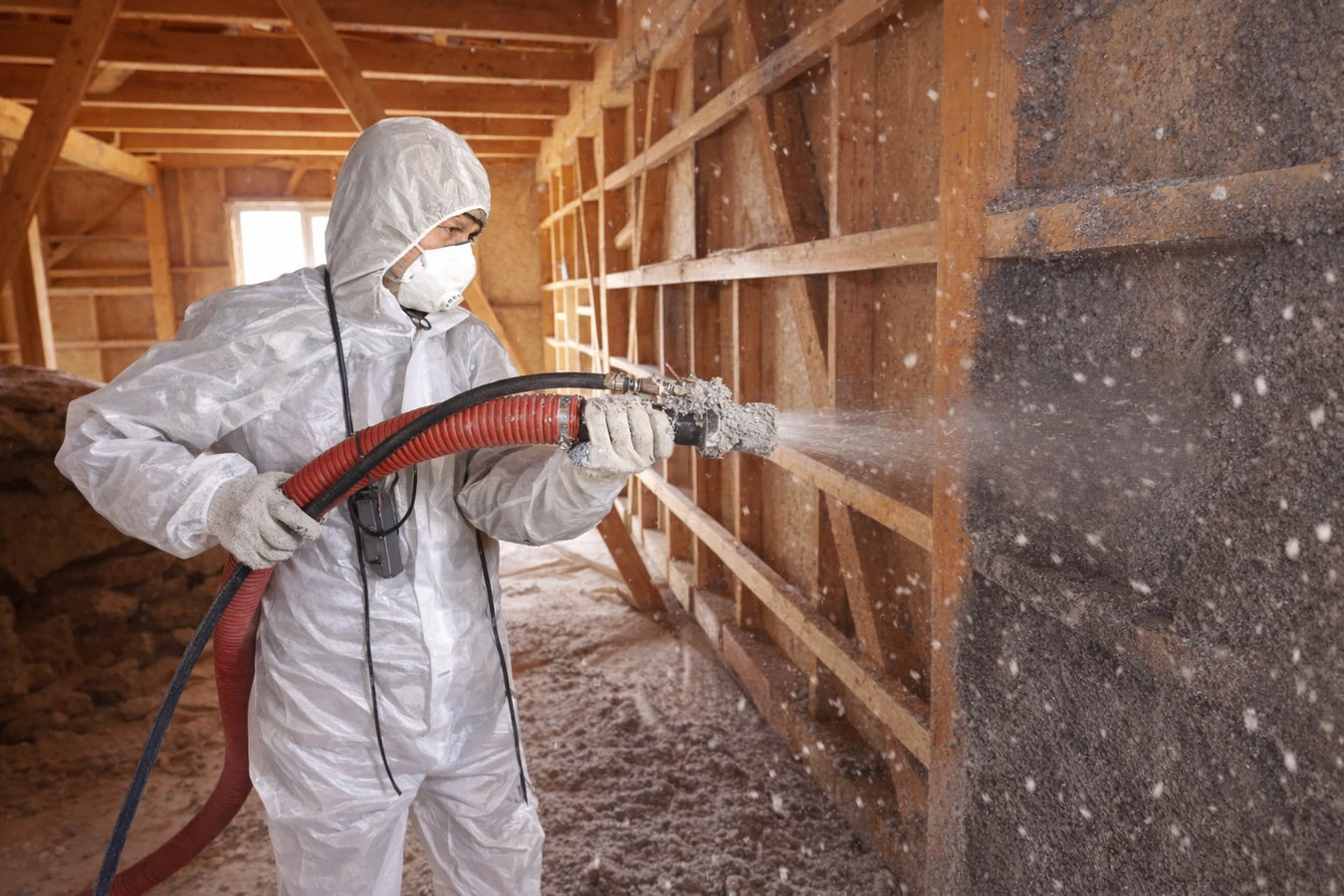
We approach home insulation as a whole-building problem rather than a single area fix. That usually starts with the attic - where the most heat escapes - using blown-in cellulose or fiberglass paired with air sealing at every penetration point. From there we address walls and the rim joist, working with the right material for each location: dense-pack blown-in for walls, spray foam or rigid board for basement rim joists. For homes that need to go further, we pair this work with insulation removal when old damaged material needs to come out before new insulation goes in.
Good insulation work almost always includes air sealing first - insulation slows heat transfer, but air sealing stops drafts from sneaking through gaps around pipes, wires, and framing. Doing one without the other leaves real savings on the table. We also help homeowners navigate Efficiency Vermont rebates and, when applicable, retrofit insulation programs designed for homes that have never been updated from their original construction.
The highest-impact starting point for most Rutland homes - brings attic coverage up to Vermont's recommended levels in a single day.
Added insulation in exterior wall cavities without major interior demo - a practical option for older Rutland homes with no wall coverage.
Seals the cold perimeter at the base of your home's walls - a commonly overlooked source of heat loss that also helps with basement comfort.
For homeowners who want a full picture before committing - we walk through every area, identify where heat is escaping, and recommend a prioritized plan.
Rutland winters are long and genuinely cold - average January lows fall well below 10 degrees, and the heating season runs from October through April. Vermont falls into one of the coldest climate zones in the country, which means the federal government recommends significantly higher insulation levels here than in most other states. A large share of Rutland's housing stock was built before 1960, often with little or no wall insulation and attic coverage that has settled and thinned over decades. Many homeowners here are not starting from a baseline of decent insulation - they are starting close to zero, which means the improvement in comfort and savings from a proper upgrade is dramatic.
Ice dams are also a recurring reality in this climate - they form when heat escaping through a poorly insulated attic melts roof snow that then refreezes at the eaves, and Rutland's heavy snowfall and repeated freeze-thaw cycles make them a constant threat. Properly insulating and air-sealing the attic is the most reliable way to stop them, not just manage them after they appear. We work throughout the region, including Castleton and Middlebury, and we understand how the mix of old housing stock, mountain weather, and Vermont's climate zone shapes what each home actually needs.
We ask a few basic questions - your home's age, which areas you are concerned about, and any problems you have noticed. We reply within one business day and schedule your free in-home estimate at a time that works for you.
We walk through your home and inspect the attic, basement, and any other areas where insulation may be lacking. This assessment gives you a clear picture of what needs to be done and why - without any obligation to move forward.
You get a written estimate that breaks down work, materials, and cost. We factor in any Efficiency Vermont rebates that apply - so you see your actual out-of-pocket cost, not just the gross price. Take your time to compare.
Most attic jobs finish in a single day. Larger whole-home projects may take two to three days. You can stay home throughout. Before the crew leaves, we walk you through what was done - and your home is fully usable immediately after.
No pressure, no obligation. We reply within one business day and walk through every option with you.
(802) 855-9280Our crews work on Rutland's homes every week and know the region's older housing stock. That gives you a clear point of contact if something does not go as expected - and it means the person working in your home understands how these houses are built.
Navigating Efficiency Vermont's rebate process on your own can feel like extra work. We are familiar with the current programs and handle the paperwork on your behalf where possible. The savings come off your project cost directly - you do not have to chase reimbursements.
Rutland's pre-1960 homes have quirks - unusual framing, stone foundations, outdated wiring - that a contractor unfamiliar with this housing stock can overlook. We check for those conditions during every estimate visit so the job gets done right, not just done. The Building Performance Institute trains contractors specifically for this kind of whole-home assessment.
Insulation without air sealing is like putting on a warm coat with the zipper open. We seal gaps around pipes, wires, and framing before adding any insulation material - because skipping this step is one of the most common reasons homeowners do not see the energy savings they expected.
These are not just talking points - they are the practices that separate a home that actually performs better from one that looks insulated on paper and still runs up high heating bills every February.
When old or damaged insulation needs to come out before new material goes in - a common first step in whole-home upgrade projects for older Rutland homes.
Learn MoreInsulation added to an existing home without major renovation - the right approach for Rutland homes that have never been updated from their original build.
Learn MoreHeating season comes fast in Vermont - reach out today and we will schedule your free estimate within one business day.