Serving Rutland, VT and surrounding areas. (802) 855-9280
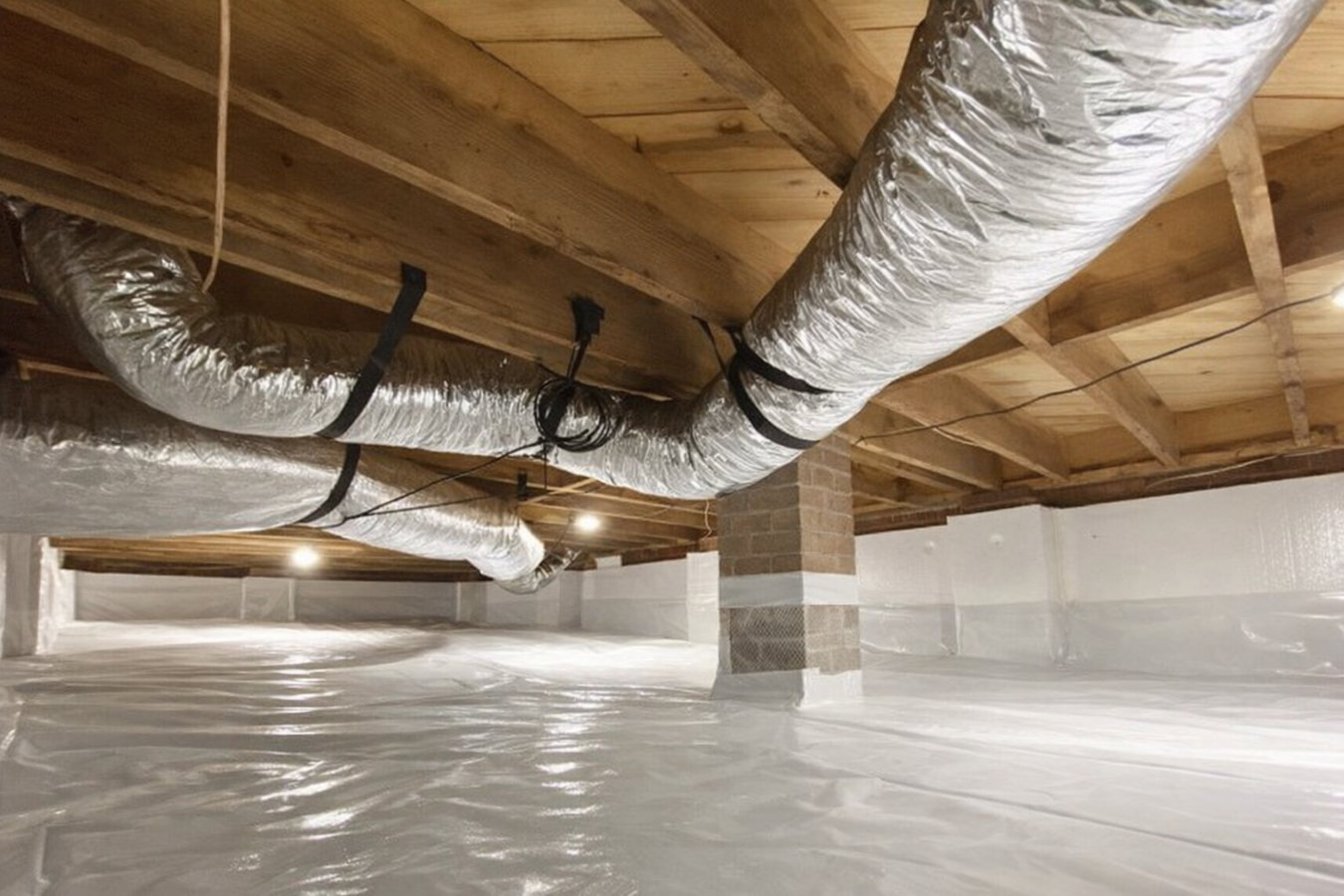
Cold floors, musty smells, and climbing energy bills often trace back to a crawl space with no moisture protection. We install vapor barriers that seal out ground moisture and help your home hold heat through a Vermont winter.
Vapor barrier installation in Rutland means laying thick plastic sheeting on the floor of your crawl space to block moisture from the ground before it reaches your floors, framing, and insulation, most jobs are completed in one to two days with no disruption to your routine.
In Rutland, ground moisture is a seasonal reality. Every spring, snowmelt saturates the soil around and beneath older homes, and that moisture pushes upward into unprotected crawl spaces. Without a barrier, it damps your insulation - which means your heating system works harder - and slowly works into the wood framing above. Most homeowners notice warmer floors and less musty smell within the first heating season after installation. If your Rutland home was built before 1960, there is a good chance it has no barrier at all, or one that has degraded to the point of providing little protection.
Many homeowners combine vapor barrier installation with a crawl space vapor barrier assessment to make sure every part of the space is covered, and pair it with attic air sealing above for a complete top-to-bottom approach to heat retention.
If you walk across your kitchen or living room on a January morning and the floor feels cold through your socks despite a warm thermostat, moisture in your crawl space is likely the cause. Damp insulation loses much of its ability to hold heat, and in Rutland's winters - where temperatures regularly drop well below freezing - that heat loss adds up fast on your energy bills.
A musty, earthy odor that is strongest near the floor or in rooms above the crawl space is a reliable sign of moisture buildup below. In Rutland, this smell often becomes most noticeable in spring, right after snowmelt saturates the ground. It does not always mean mold is present, but it does mean moisture is getting in and needs to be stopped.
If you have looked into your crawl space and noticed water droplets on pipes or wood that looks dark and damp, that moisture is doing exactly what a vapor barrier prevents. Wood that stays damp will eventually rot, and structural damage to floor joists is far more expensive to repair than a vapor barrier installation.
If your Rutland home was built before 1970 and you have never had anyone look at the crawl space, there is a reasonable chance it has no vapor barrier - or one that is cracked, torn, or partially missing. Homes from that era simply were not built with today's moisture standards, and the combination of Rutland's wet springs and cold winters means the crawl space has been working against you for years.
Every vapor barrier installation we do starts with a thorough assessment of your crawl space. We clear any debris, check for standing water or active leaks, and look for signs of mold or rot that need to be addressed before anything is sealed in. Skipping this step is one of the most common shortcuts contractors take - and it leads to problems. If we find an issue that needs to be fixed first, we tell you clearly before any work begins.
The barrier itself is installed with overlapping seams sealed with tape designed for this purpose - not left loosely next to each other - and the edges are run up the foundation walls and secured. We use thicker-gauge polyethylene than minimum spec, because Vermont crawl spaces are accessed periodically for plumbing and mechanical work, and thinner material tears too easily to hold up over time. For homeowners dealing with broader moisture challenges throughout the home, we also handle crawl space vapor barrier assessment and replacement alongside the full installation.
Best for homes with bare dirt crawl space floors that have never had moisture protection installed.
Best for homes with existing plastic that has become torn, brittle, or shifted away from the walls over years of use.
Best for crawl spaces with accumulated debris, evidence of prior moisture damage, or conditions that need to be corrected before new material goes down.
Best for homeowners who want to solve both moisture and heat loss at once, reducing the need for two separate contractor visits.
Rutland sits in the Otter Creek valley and receives significant precipitation - including around 80 inches of snow in a typical winter. When that snowpack melts in spring, the ground saturates quickly and moisture pressure against crawl space floors is at its peak. Vermont's freeze-thaw cycles also stress older foundation walls, creating small cracks and gaps that give moisture new entry points over time. For homeowners in Rutland's older neighborhoods - where most homes were built before 1960 on stone or early poured-concrete foundations - the combination of moisture pressure and aging structure makes vapor barrier installation one of the most practical investments you can make. Vermont homeowners may also qualify for rebates through Efficiency Vermont, the state's energy efficiency utility, which offers incentives for qualifying moisture control improvements.
We serve homeowners throughout central Vermont, including Castleton and Poultney, where homes share the same pre-war construction and seasonal moisture challenges as Rutland. Whether your home sits on bare soil in a tight city crawl space or a larger rural foundation, the solution is the same: a properly installed barrier that covers every inch of the floor with no gaps, no loose seams, and no shortcuts.
We reply within one business day. We ask a few basic questions - your home's age, whether you have a crawl space or basement, and any problems you have noticed - so we can come prepared with the right materials and equipment.
We physically enter the crawl space to check its size, layout, moisture conditions, and whether any prep work is needed. You get a clear written estimate before any work is agreed to - not a single number, but a breakdown of materials, labor, and scope.
The crew clears the crawl space floor, lays the barrier with overlapping sheets and sealed seams, and secures the edges at the walls. Most jobs are done within a day. You can stay home - the work happens below, not in your living space.
Before we leave, we walk you through what was installed and provide photos of the finished work. If Efficiency Vermont rebates apply to your project, we provide the documentation you need to submit your claim. Keep a copy - it is useful if you ever sell your home or need future crawl space work done.
Free on-site assessment and written estimate. No pressure. We reply within one business day.
(802) 855-9280We have worked in crawl spaces across Rutland and the surrounding area for years - including the tight, low-clearance spaces under pre-war homes near downtown and the more accessible foundations in newer neighborhoods. That experience matters when seams need to be sealed around obstacles and edges need to hold against irregular stone walls.
We do not just roll out plastic and leave. We check the crawl space floor for debris, standing water, and signs of wood damage before any material goes down. If something needs to be fixed first, we tell you - because sealing over an existing problem is not a solution, and a good contractor will not pretend it is.
Our crews are based right here and know how Rutland's homes handle moisture through a full Vermont winter. We have installed vapor barriers across the region's older housing stock, and we document the work so you have a clear record of exactly what was done under your home.
Crawl space work happens where most homeowners cannot easily check it. We document the entire installation with photos and walk you through what was done before we leave. You have a clear record of the work and the materials used - so you are never left wondering whether you got what you paid for.
Every job we do in Rutland is backed by our standard for pre-installation transparency and documented completion. You will know exactly what condition your crawl space was in before we started, and exactly what was done to protect it going forward.
Seal air leaks in the attic to complement a vapor barrier below and reduce heat loss from top to bottom.
Learn MoreAssess and replace existing crawl space plastic sheeting in homes where the original barrier has aged or failed.
Learn MoreSpring fills our schedule fast - call now for a free on-site assessment and written estimate before the rush begins.