Serving Rutland, VT and surrounding areas. (802) 855-9280
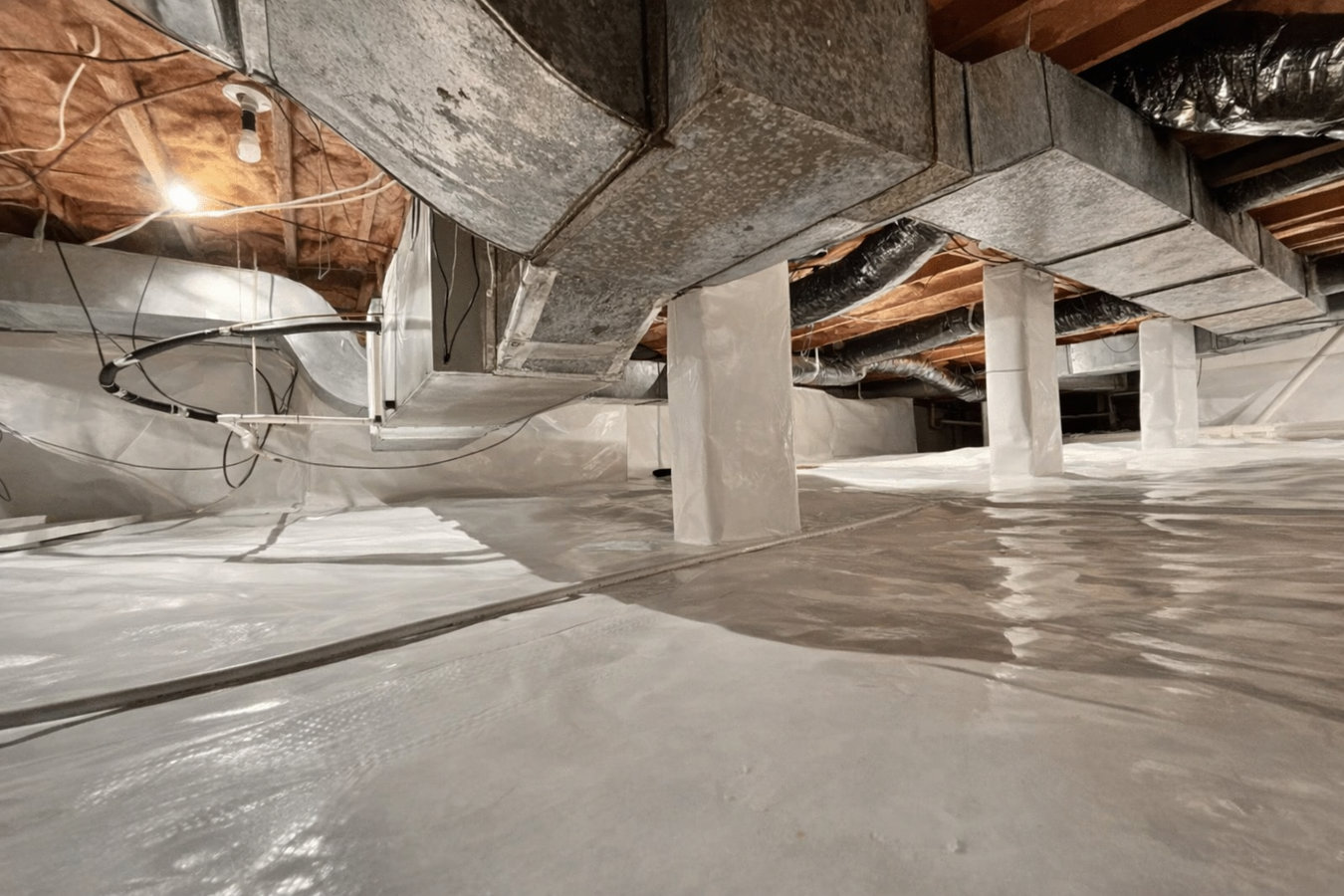
Ground moisture works up through your crawl space every Vermont winter and spring. We install thick, properly sealed vapor barriers that protect your floors, framing, and air quality for years.
Crawl space vapor barrier installation in Rutland means laying thick plastic sheeting across the bare dirt floor of your crawl space to stop ground moisture from rising into your home, most jobs are completed in a single day with no disruption to your daily routine.
In Rutland, ground moisture is not a seasonal nuisance - it is a year-round reality. Snowmelt in March and April saturates the soil around and beneath homes for weeks at a time, and that moisture pushes upward into unprotected crawl spaces. Over time, it soaks into floor joists, creates musty odors throughout the house, and can lead to wood rot and mold. A properly installed vapor barrier is one of the most direct things you can do to protect the structure of your home and the air quality your family lives with.
Many Rutland homeowners pair a vapor barrier with crawl space insulation to address both moisture and heat loss at the same time - a combination that pays off through lower energy bills and a more comfortable home.
If your home has a faint earthy smell that gets worse after snowmelt in March and April, it is coming from the crawl space below. That smell is ground moisture actively moving into your living space. No air freshener will fix it - the moisture source has to be stopped.
Rutland winters are long, and a crawl space without a vapor barrier loses heat rapidly through the ground. If certain areas of your floor feel noticeably colder or have any give underfoot, moisture may have already begun to affect the wood framing below - especially in older homes where joists have had decades of exposure.
If you can peek into your crawl space with a flashlight, look for water droplets on pipes, dark staining on wood beams, or visible mold growth. These are direct signs that moisture levels are high enough to cause damage. You do not need to crawl all the way in to spot them.
A large share of Rutland homes were built before moisture control in crawl spaces was standard practice. If you have lived in your home for years and cannot recall any work being done under the house, there is a strong chance the crawl space has bare dirt and no barrier. This is worth confirming before the next Vermont winter arrives.
We install crawl space vapor barriers using heavy-duty polyethylene sheeting, typically 10 to 20 mils thick - material that holds up to Vermont's wet springs and stays intact when a contractor or inspector needs to access the space later. Every installation includes overlapped and taped seams and edges run up the foundation walls, so there are no gaps for moisture to sneak through. We also handle pre-installation prep: clearing debris, checking for standing water, and noting any existing wood damage before we lay a single sheet. If we find a problem that needs to be addressed first, we tell you - we do not seal over it.
Homeowners dealing with broader moisture issues often combine a vapor barrier with a full vapor barrier installation that extends to basement walls and other areas of the home. For homes with significant heat loss below the floor, pairing the moisture barrier with crawl space insulation delivers the most complete protection against Rutland's cold winters and wet springs.
Best for homes with a dry or mostly dry crawl space that needs ground moisture protection before the next wet season.
Best for older Rutland homes with stone or rubble foundations where moisture enters from multiple directions, including the foundation walls.
Best for crawl spaces with existing debris, signs of moisture damage, or old deteriorated plastic that needs to be cleared before new material goes down.
Best for homeowners who want to address both moisture and heat loss in one visit, reducing energy bills and improving comfort at the same time.
Rutland sits in the Otter Creek valley between the Taconic and Green Mountains, and the city receives significant snowfall and spring rainfall every year. When the snowpack melts in March and April, the ground saturates quickly and moisture pressure against crawl space floors is at its highest. A large share of Rutland homes were built before 1960 - before moisture protection in crawl spaces was standard practice - which means many of the city's older wood-frame homes have had bare dirt floors for decades, with no barrier between the ground and the framing above. Homeowners in areas near Otter Creek and its tributaries face an additional challenge: elevated water tables in spring can cause active pooling under homes, which a vapor barrier alone may not fully address.
We serve homeowners across the region, including Brandon and Wallingford, where many homes share the same pre-1960 construction and valley moisture challenges as Rutland. Wherever you are in the area, the core issue is the same: Vermont's climate creates real and recurring moisture pressure against crawl space floors, and a properly installed barrier is the most direct way to stop it. For authoritative guidance on crawl space moisture control, the U.S. Department of Energy publishes detailed guidance on moisture management that applies directly to homes in cold, wet climates like Rutland.
We reply within one business day. The first conversation is short - we ask about your home's age, the approximate crawl space size, and any specific issues you have noticed. No cost, no commitment.
A crew member physically enters the crawl space to assess its size, foundation type, existing moisture damage, and any prep work needed. We take photos and share them - so you can see exactly what is under your home without crawling in yourself.
Your written quote specifies the thickness of the plastic, whether any prep work is included, and how long the job will take. No single-number quotes with no explanation - you see exactly what you are paying for before agreeing to anything.
The crew installs the barrier - overlapping seams, taping joints, running edges up the foundation walls - typically in four to eight hours. Before we leave, we walk you through what was installed and what to watch for, and we answer any questions about the warranty.
Free inspection, written estimate, no pressure. We reply within one business day.
(802) 855-9280Many Rutland homes sit on stone or rubble foundations - not poured concrete. We have worked in these crawl spaces and know how to seal the edges of a barrier against irregular stone surfaces, which is where most installations fail. That local knowledge protects you from a job that looks complete but leaves moisture pathways open.
We install thicker polyethylene sheeting than the minimum spec because Vermont crawl spaces need it. Thinner plastic tears, degrades faster, and fails around obstructions. A barrier installed with the right material and proper seam sealing can last 15 to 25 years - which is what the investment is worth.
Crawl space work happens in a space most homeowners cannot easily check themselves. We document the job with photos before and after so you have a clear record of the condition we found and the work that was done. You know exactly what is under your home - and that it was done right.
Our crews are based right here in the Rutland area and follow recognized building-science standards on every job. The Building Performance Institute sets national standards for crawl space and building science work - the same principles that guide how we approach every job in Rutland and the surrounding area.
We have been serving central Vermont homeowners since 2015 and we understand what Rutland's climate and older housing stock demand from a vapor barrier installation. When we leave your property, you will have documentation of the work, a clear sense of what to watch for, and the confidence that the job was done correctly.
Full-home vapor barrier installation covering crawl spaces, basement walls, and other moisture entry points.
Learn MoreAdd insulation to your crawl space alongside a vapor barrier to cut heat loss through the floor during Vermont winters.
Learn MoreEvery season without a vapor barrier is another season of ground moisture working on your floors and framing. Call us today for a free inspection and written estimate.