Serving Rutland, VT and surrounding areas. (802) 855-9280
Drafty rooms and climbing fuel bills are a signal your home is losing heat. Spray foam seals air leaks and insulates in one step - so your furnace runs less and every room stays comfortable.
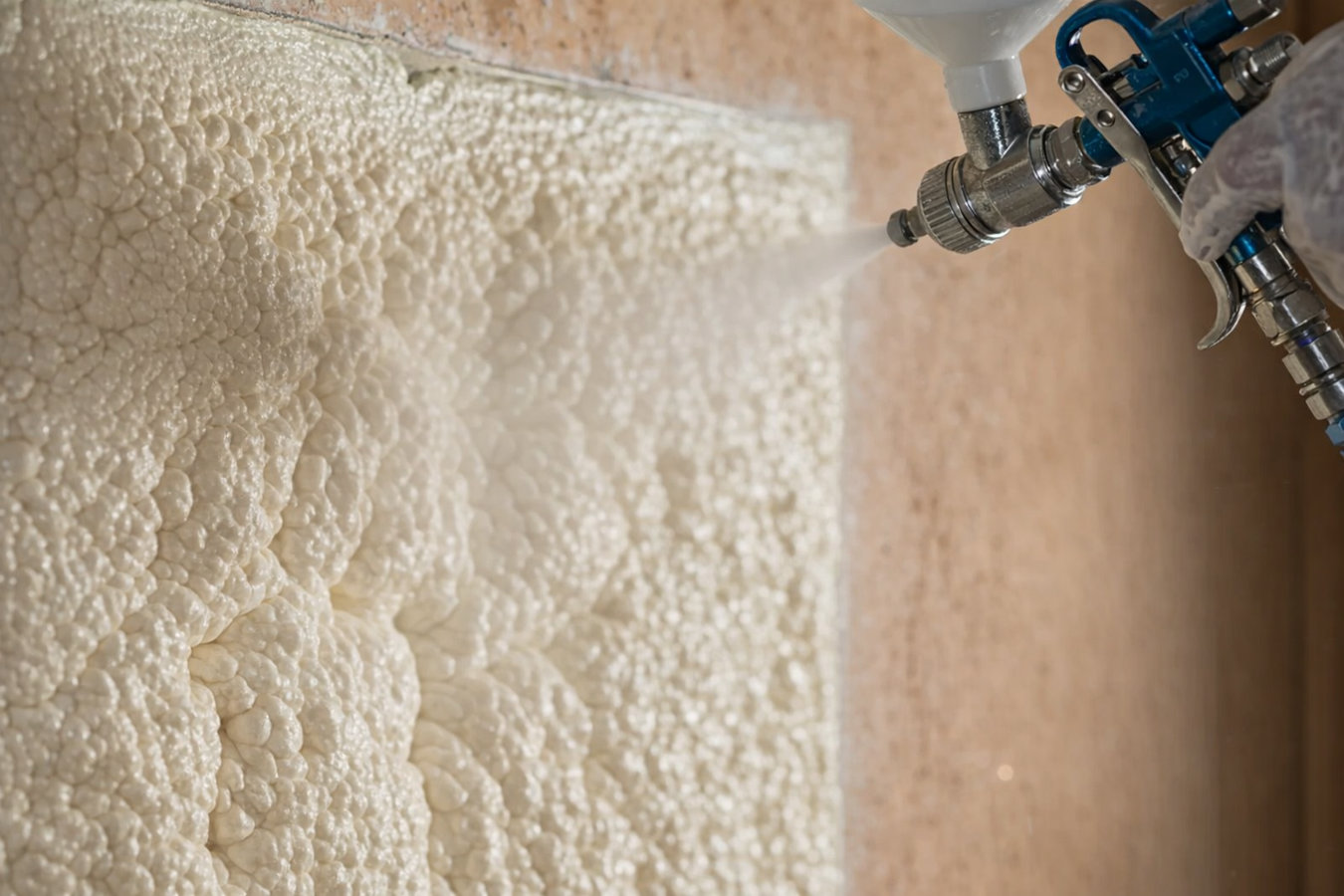
Spray foam insulation in Rutland, VT is a liquid material sprayed into walls, attics, crawl spaces, and rim joists where it expands, hardens, and seals gaps completely - most residential projects are completed in a single day.
Rutland's winters are long and genuinely cold, running from October through April with temperatures that regularly drop into the single digits. Older homes here - and most of Rutland's housing stock dates to before 1960 - were built with little insulation in mind. Wood framing, rim joists, and wall cavities in these houses are full of irregular gaps that batts and blown-in material cannot fully reach. Attic insulation addresses the ceiling plane, but spray foam is the tool that handles the awkward spots - rim joists, knee walls, and cathedral ceilings - where heat loss is highest and access is tightest.
Because spray foam insulates and air-seals in one step, the U.S. Department of Energy recognizes it as one of the most effective upgrades for cold-climate homes. It is why spray foam is a popular choice when Rutland homeowners are upgrading century-old houses.
If your fuel oil, propane, or electric heating costs have been rising faster than energy prices alone explain, your home is losing heat somewhere. In Rutland's long winters, a poorly insulated attic, basement rim joist, or wall cavity can bleed warmth steadily from October through April - and you feel it on your monthly bill first.
Ice dams - those thick ridges of ice that build up along the edge of your roof - are a visible sign that heat is escaping through your attic and warming the roof deck unevenly. They are a familiar sight on older Rutland homes, and they can cause serious water damage when ice melts and backs up under shingles.
If one room - especially one over a garage, at the end of a hallway, or above a crawl space - always feels colder than the others, air is getting in somewhere. Drafts near baseboards, around window frames, or along exterior walls are a strong signal that insulation in that area has gaps, has settled, or was never installed properly.
Damp basements and crawl spaces are common in older Vermont homes, and poor insulation is often a contributing factor. When warm interior air meets cold, uninsulated surfaces, it condenses - and that moisture creates the conditions mold needs to grow. Musty smells or visible moisture on walls are signs spray foam on the rim joists can help address.
We install spray foam in every part of the home where air leaks and heat loss are concentrated. That includes attic floors, roof decks, basement rim joists, crawl space walls, and exterior wall cavities. For homes that need the strongest moisture and thermal barrier available, we use closed-cell foam insulation, which delivers the highest R-value per inch and doubles as a vapor barrier. In situations where interior air quality and sound control matter more than maximum R-value, open-cell foam is the right fit instead.
Many Rutland homeowners also pair spray foam with broader upgrades. If you are working on an older home that needs complete coverage from top to bottom, our attic insulation service handles the ceiling plane while spray foam addresses the framing details. Together, they eliminate the two biggest heat-loss paths in most Rutland homes.
Best for rim joists, crawl spaces, and any area where moisture resistance and maximum R-value per inch are the priorities.
Well-suited for interior walls and attic applications where air sealing is the main goal and vapor permeability is acceptable.
One of the highest-impact applications in an older home - sealing the rim joist eliminates a major source of cold air infiltration at the foundation.
Applied to the attic floor or the underside of the roof deck to stop heat loss and prevent the ice dams that plague older Rutland roofs.
Rutland sits in a valley between the Taconic and Green Mountains at roughly 600 feet elevation. Average January temperatures regularly drop into the single digits, and the heating season stretches for six months or more. A large share of the city's housing stock was built before World War II - wood-frame homes with stone or early poured-concrete foundations, minimal original insulation, and decades of patchwork repairs. The gaps in these houses are numerous, irregular, and exactly the kind of problem spray foam was designed to solve. Homeowners in Rutland Town and Killington deal with similar cold-climate conditions and older construction in the surrounding area.
Rutland's freeze-thaw cycle - where temperatures swing above and below freezing repeatedly through winter and spring - also creates conditions that accelerate moisture problems in under-insulated homes. Ice dams, where snow melts on a warm roof and refreezes at the cold eaves, are a well-known seasonal hazard here. Efficiency Vermont - the nation's first statewide energy efficiency utility - offers rebates specifically for insulation and air sealing upgrades, which can meaningfully reduce the out-of-pocket cost of a spray foam project.
We will ask a few basic questions about your home and the areas you want insulated. Most homeowners hear back within one business day, and we schedule an in-person visit before providing any price.
We walk through the areas you want treated - attic, rim joists, crawl space, or walls - take measurements, and check for moisture or structural conditions that affect how foam should be applied. This is your chance to ask questions.
After the visit you receive a written estimate spelling out the foam type, areas covered, thickness, and total cost. We note whether the project requires a permit and, if so, handle pulling it.
The crew arrives with equipment, works in full protective gear, and completes a standard attic or rim-joist project in one day. You and your household - including pets - will need to stay out for at least 24 hours while the foam cures.
We will walk through your home, explain exactly what we recommend and why, and give you a written quote - no obligation and no pressure.
(802) 855-9280We put the full scope of your spray foam project in writing and document the areas we treat and the materials we use. You get a clear record of the work from start to finish, so there is never a question about what was done.
Spray foam is not the same as rolling out batts. Our crew has received formal application training covering foam chemistry, safety protocols, and proper curing times - because a rushed or undertrained installation can leave your home worse off than before.
As a contractor registered with Efficiency Vermont, we can help you apply for available rebates as part of your project. The paperwork does not end up on your kitchen table - we handle it so you receive the savings you are entitled to.
Century-old houses sometimes have moisture issues or ventilation considerations that need to be addressed before foam goes in. We flag these during the assessment visit rather than spray over a problem - and we tell you plainly what we found.
Every job ends with a walkthrough so you can see the coverage, confirm the thickness, and ask any last questions. Spray foam, properly installed, is visible and permanent - you can see the difference before we leave and feel it in your heating bills through the first cold season after the work is done.
Full attic insulation service using blown-in or batt material to bring your ceiling R-value up to Vermont's cold-climate requirements.
Learn MoreDense closed-cell spray foam for the highest R-value per inch - the preferred choice for rim joists, crawl spaces, and moisture-sensitive areas.
Learn MoreRutland's heating season is long - beat the fall rush and lock in your installation before temperatures drop.