Serving Rutland, VT and surrounding areas. (802) 855-9280
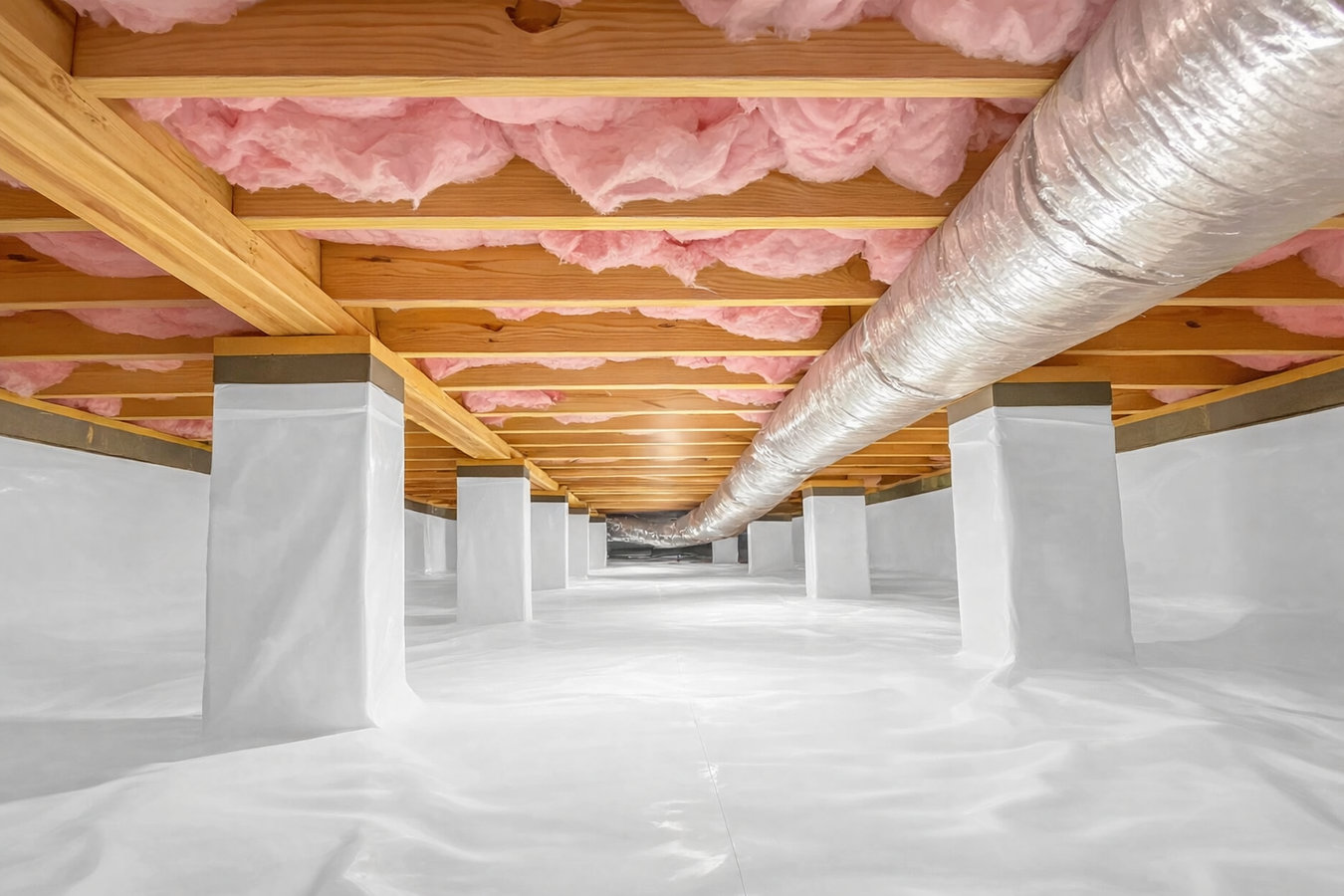
Cold floors and climbing heating bills in a Vermont winter are often a crawl space problem. We insulate it properly so your home holds heat where it belongs.
Crawl space insulation in Rutland acts as a thermal blanket between the cold ground and your living space above, stopping heat from bleeding out through your floors. Most jobs are completed in one day, and you will notice the difference in floor temperature from the first cold night after installation.
If you walk across your kitchen or living room floor in January and it feels cold through your socks, the space below that floor is likely under-insulated or not insulated at all. In Rutland's older neighborhoods - where many homes date back to the late 1800s and early 1900s - crawl spaces were never designed with modern energy standards in mind. The original insulation, if it exists, is often compressed, moldy, or missing in sections. A proper crawl space insulation install, sometimes paired with a crawl space vapor barrier, addresses both the heat loss and the moisture issues that make it worse.
Not sure what is going on under your floors? Call us at (802) 855-9280 and we will take a look and give you a straight answer.
If the first floor of your home feels noticeably cold through your socks even when the heat is running, that is a strong sign heat is escaping through an under-insulated crawl space below. In Rutland's winters, where temperatures regularly drop into the single digits, this problem is especially pronounced - the cold ground pulls heat right out of your home.
If your fuel or electric bills have gone up over the past few winters and you have not changed your habits, heat loss through the crawl space is one of the first places to look. Older Rutland homes with vented crawl spaces are particularly prone to this - cold outside air circulates freely under the floor and drags heat out of your living space.
Open the hatch to your crawl space and shine a flashlight in. If you see insulation hanging down, falling away from the floor joists, or missing in patches, it is no longer doing its job. Fiberglass batts are especially prone to sagging in damp conditions, which is common in Rutland crawl spaces after a wet spring.
If you notice a damp, musty odor in your home after the snow melts in March or April, it may be coming from your crawl space. Rutland's clay soils and heavy snowmelt can push moisture into crawl spaces each spring, and if there is no vapor barrier or the insulation is wet, mold can start growing underneath your floors.
We offer two main approaches depending on your crawl space setup. For vented crawl spaces - the most common type in Rutland's older homes - we insulate the floor joists above the space, fitting material snugly between the wooden beams that support your floors. For sealed or encapsulated crawl spaces, we insulate the walls and floor of the space itself, which is often the better long-term choice when moisture is a factor. Pair either approach with a wall insulation upgrade and you address two of the biggest sources of heat loss in a single project.
Before any material goes in, we assess the crawl space for moisture, mold, and structural issues. If old insulation needs to come out first, we handle that as part of the job. Every install includes a post-job walkthrough so you can see the finished work before we leave. Vermont's energy efficiency utility, Efficiency Vermont, offers rebates for qualifying insulation upgrades - ask us whether your project is eligible when you call.
Best for vented crawl spaces - insulation is fitted between the joists above the space to stop heat loss from the ground up.
Suited for sealed crawl spaces or homes with persistent moisture - the walls and ground are sealed and insulated for long-term protection.
For crawl spaces where sagging, wet, or contaminated material needs to come out before a proper new install can happen.
For crawl spaces where ground moisture is a recurring issue - a polyethylene ground cover works alongside insulation to block seasonal moisture.
Rutland sits in a valley in the Green Mountains and regularly sees temperatures drop well below zero in January and February. That kind of cold puts enormous pressure on any uninsulated or under-insulated crawl space - pipes can freeze, floors feel like ice, and heating bills climb fast. Rutland County also has areas with clay-heavy soils that do not drain well, and the heavy snowpack that melts each spring can push moisture up through the ground and into crawl spaces. This seasonal moisture cycle is one of the main reasons insulation fails prematurely in this area - wet insulation loses its effectiveness and can become a breeding ground for mold. A contractor who understands this local pattern will recommend a vapor barrier along the ground as part of any insulation project, not as an upsell.
We work on homes throughout Rutland and the surrounding area, including Proctor and Pittsford. Vermont is also one of the few states with a dedicated energy efficiency utility - Efficiency Vermont - that offers cash rebates to homeowners who upgrade their insulation. The U.S. Department of Energy's crawl space insulation guidance is also a useful reference for understanding your options before you schedule an estimate.
When you call, we ask a few basic questions - the size of your home, whether you have had any moisture or mold issues, and how you access the crawl space. We can usually schedule an in-person estimate within one business day.
A contractor visits and physically inspects the crawl space - checking existing insulation, looking for moisture or mold, and measuring the space. The visit takes about 30 to 60 minutes. After, we walk you through what we found and explain what we recommend and why. A written estimate follows within a day.
The crew sets up protective coverings near the access point, removes any old material, addresses flagged moisture issues, and installs the new insulation. A typical Rutland home takes four to eight hours. No curing time needed - the insulation is effective immediately.
We do a final walkthrough with you before leaving so you can see the finished space yourself. If you are applying for an Efficiency Vermont rebate, we provide the documentation you need or handle the submission directly - reducing your out-of-pocket cost without the paperwork headache.
We respond within one business day. No obligation - just a thorough assessment of what is happening under your floors and what it will take to fix it.
(802) 855-9280A wet crawl space needs moisture control before new insulation goes in - not after. We flag standing water, mold, and active leaks during the inspection and tell you upfront what needs to happen first. You will not get surprised by a moisture problem halfway through the job.
Vermont homeowners can get real money back for qualifying crawl space insulation upgrades through Efficiency Vermont. We are familiar with the program and can handle the documentation on your behalf so you get the savings without the paperwork. Ask us when you call whether your project is eligible.
Vermont has adopted residential energy standards that set minimum insulation requirements for crawl spaces, and Rutland's building department enforces them. When a permit is required, we pull it and manage the inspection process - giving you documented proof the work meets state standards, not just our word.
We work in Rutland's historic neighborhoods week in and week out - the Hill Section, older streets near downtown, homes with vented crawl spaces that were never designed for Vermont's winters. That familiarity means the right material recommendation for your specific home, not a generic solution that works somewhere else.
From moisture assessment to final walkthrough, every crawl space job we do in Rutland is built around one goal: a dry, well-insulated space that keeps your home warmer and your bills lower through a Vermont winter. Call (802) 855-9280 or request a free estimate online.
Complete your home's thermal envelope by addressing heat loss through exterior walls as well.
Learn MoreA ground-level vapor barrier works alongside insulation to block moisture from rising up through Rutland's clay soils.
Learn MoreCrawl space heat loss compounds every cold month. The sooner the insulation is right, the sooner you stop paying to heat the ground under your home.